PEOPLE
My Involvement with "Sites of Japan's Meiji Industrial Revolution", Challenges and Message for the Future
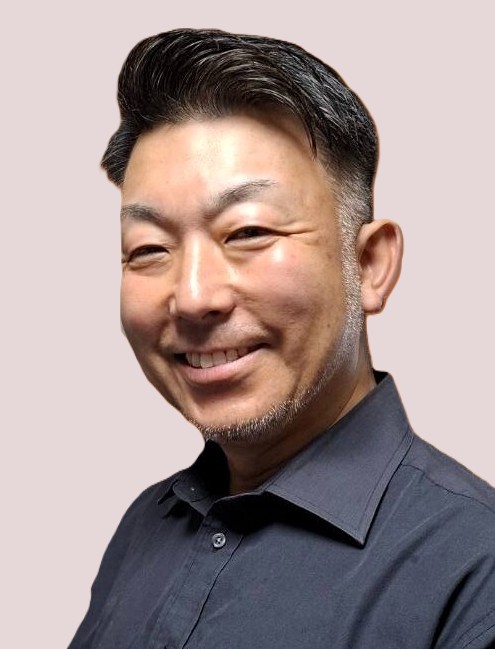
Chief Senior Specialist for Cultural Properties
Buried Cultural Properties Section, Cultural Resources Policy and Monuments and Sites Division, Agency for Cultural Affairs
Born in Kagoshima Prefecture.
Graduated from the Faculty of Letters at Kyushu University.
1995, started working for the Kagoshima Prefectural Center for Buried Cultural Properties.
2002, joined the Cultural Properties Division of the Kagoshima Prefectural Board of Education, handling matters related to natural monuments, architectural structures, and swords.
Since 2006, has been involved in efforts to have “Sites of Japan’s Meiji Industrial Revolution” inscribed on the World Heritage List in Kagoshima Prefecture and other locations.
Since 2019, has been working on matters related to buried cultural properties and Japan Heritage at the Cultural Properties Division of the Kagoshima Prefectural Board of Education.
Since 2021, he has been working in the Cultural Promotion Division of the Kagoshima Prefecture Department of Tourism, Culture, and Sports, focusing on cultural properties and cultural promotion.
Since 2023, in his current position.
My Involvement with “Sites of Japan’s Meiji Industrial Revolution”
I became involved in the effort to have “Sites of Japan’s Meiji Industrial Revolution” inscribed on the World Heritage List in fiscal year 2006 (Heisei 18).Since Kagoshima Prefecture began its efforts toward World Heritage inscription in fiscal year 2005 (Heisei 17), this marked the second year of the project.
My involvement began in fiscal year 2005 (Heisei 17), when Kagoshima Prefecture independently established a committee that had only made a single recommendation: that the entire Kyushu region should focus on the three industries—iron, shipping, and coal—from the late Edo period through the Meiji era.
At that time, not only were there no mechanisms in place for inclusion on the national provisional list or any broad-based consultative bodies, but Kagoshima Prefecture also lacked an organization to lead the effort; there was no budget and no concrete plan. Therefore, we were essentially starting from scratch and I remember feeling completely at a loss about what to do when I was transferred to that department in April.
The idea of being designated a World Heritage Site seemed like a pipe dream, and even I, as the person in charge, was skeptical. At that time, the Kyushu Governors’ Association was discussing the regional state system, and each local government was bringing forward issues to be addressed across the broader Kyushu region, with deliberations proceeding on a case-by-case basis. Consequently, efforts toward World Heritage designation were carried out under the theme of “Preservation and Utilization of Industrial Heritage of Modernization,” with Kagoshima Prefecture taking the lead.
My first assignment was to organize the history and related heritage of three industries in Kyushu – Iron and Steel, Shipbuilding, and Coal Mining - from the late Edo period through the Meiji era. To weave these into a single narrative, I had to identify and connect the relationships between these industrial sectors and across regions, and then synthesize them into a written account. Examples include the Satsuma Clan establishing a ship repair yard in Nagasaki, which later became the Nagasaki Shipyard, and the use of coal from Takashima, Miike, and Chikuho as raw material for steelmaking at the Yawata Steel Works.
At that year’s Kyushu Governors’ Conference, the results were compiled under the title “The Significance of Kyushu’s Industrial Heritage of Modernization,” and I still vividly remember the sense of relief I felt when Governor Ito, who was in office at the time, commented that we had “created something from nothing.”
On the other hand, while there was talk - which seemed like a pipe dream - of local governments across Kyushu jointly seeking World Heritage designation, the prefectural governments, though willing to cooperate by attending meetings and the like, were reluctant to take an active role - such as allocating funds - and so, in terms of momentum, the initiative got off to a slow start.
Chief Senior Specialist for Cultural Properties
Buried Cultural Properties Section, Cultural Resources Policy and Monuments and Sites Division, Agency for Cultural Affairs
Director, National Council of Industrial Heritage
President, Duke Estate Co.Ltd.
Representative Director, National Congress of Industrial Heritage
(Honorary Advisor, Kyushu Railway Company (JR Kyushu)
Senior Researcher, Industrial Heritage Information Centre
Honorary Advisor, Nippon Mining Co., Ltd.
The Ambassador of Supporting Kamaishi Hometown
Former Director of Nagasaki City World Heritage Office
Former General Manager, Nagasaki Shipyard and Machinery Works, Mitsubishi Heavy Industries, Ltd.
Chairman, Fujisankei Group
Executive Managing Advisor, Fuji Television Network, Inc.
Executive Managing Advisor, Fuji Media Holdings, Inc.
Advisor, Federation of Japan Port and Airport Construction Association
(Ex. Chairman of Specialists Center of Port and Airport Engineering)
Mayor of Nagasaki City
Former Director of the Sano Tsunetami Memorial Museum (currently known as Sano Tsunetami and the Mietsu Naval Dock History Museum)
Director of NPO Association for Thinking about Satoyama
Director of National Congress of the Industrial Heritage
Honorary Chief Priest Toshinari Ueda
Former Mayor of Omuta City
Archaeologist and Heritage Conservation Specialist
A fellow of the Japan Federation of Engineering Societies
Team Member of the Industrial Project Team Office for the Promotion of World Heritage Listing under Cabinet Secretariat
Governor of Kagoshima Prefecture
Mayor of Hagi City
Mayor of Uki City, Kumamoto Prefecture
The Former Employee of Nippon Steel Corporation
An Associate Professor of the Faculty of Science and Engineering in Iwate University
Chairman of the Tourist Guide Association of Misumi West Port
President of Kuraya Narusawa Co., Ltd.
Chairman of Izunokuni City Tourism Association
Director and General Manager of Gunkanjima Concierge
Producer of the Gunkanjima Digital Museum
Owner at Tōge Chaya
Chairman: Mr. Hidenori Date
President: Mr. Masahiro Date
Proprietor, Houraikan Inn
Representative Director of Egawa Bunko non-profit incorporated foundation
The 42nd head of the Egawa Family
Democratic Party for the People (DPP) Representative for Nagasaki Prefecture
President of the NPO, Way to World Heritage Gunkanjima
Representative Director
MI Consulting Group
President of Watanabe Production Group and Honorary Chair of Watanabe Productions Co., Ltd.
Member of the House of Councillors
Governor
Kagoshima Prefecture
World Heritage Consultant
Director and Dean, The Kyushu-Asia Institute of Leadership
Representative Director, SUMIDA, Inc.
Journalist, founder of the Shimomura Mitsuko Ikikata Juku School
Representative, Rally Nippon
Chairman, Sites of Japan’s Meiji Industrial Revolution World Heritage Route Promotion Council Director, National Congress of Industrial Heritage
Representative Director, General Incorporated Foundation National Congress of Industrial Heritage (Advisor, Public Interest Incorporated Foundation Capital Markets Research Institute)
Mayor of Nagasaki City
Policy Director at Heritage Montreal
World Heritage Consultant
Executive Director of Kogakuin University
Heritage Architect and International Consultant
Head of Data Acquisition at The Glasgow School of Art’s School of Simulation and Visualisation
Head of Industrial Heritage, Historic Environment Scotland, Edinburgh
Scottish Ten Project Manager, Historic Environment Scotland, Edinburgh
Mayor of Izunokuni City, Shizuoka Prefecture
Pro-Provost and Chairman of Council of the Royal College of Art. Heritage advisor of Canal & River Trust for England and Wales.
Dean of Tokyo Rissho Junior College
Professor emeritus of Keio University
Mayor of Kitakyushu City
At the 39th session of the World Heritage Committee convened in Bonn, Germany, from June 28 to July 8, 2015, the decision was approved to inscribe the Sites of Japan’s Meiji Industrial Revolution on the World Heritage list.
At a celebratory party held to mark the occasion, some of the primary promoters of the project spoke of their joy in achieving their goal and of the trials and tribulations to getting there.
Director and Managing Executive Officer, Hanshin Expressway Company Limited
Member, Board of Directors, National Congress of Industrial Heritage
Vice-Governor of Shizuoka Prefecture
Mayor of Hagi City
Chairman, Tokyo Metro Co., Ltd.
Mayor of Omuta City
Deputy Director-General, Lifelong Learning Policy Bureau, MEXT
Former Counsellor, Cabinet Secretariat
Mayor of Kamaishi City
Member, Board of Directors, National Congress of Industrial Heritage Counselor, Shimadzu Limited
Chairman of the Consortium for the World Heritage Inscription of Modern Industrial Heritage (Kyushu-Yamaguchi) and governor of Kagoshima Prefecture (as of 2015)